The Work
Beyond Binary — the framework.
Most of what goes wrong when people think together isn't a failure of effort or intelligence. It's one structural problem, repeating: we run a mind built to sort and decide, on the kind of problems with a scale of complexity that simply can't be addressed with that thinking. Beyond Binary is the account of that structure, and of what becomes available once you can see it working.
What it names
Underneath strategy and personality, we all run the same default cognitive system. It was built for survival: sort the world into categories, decide fast, hold the line. On problems with a single right answer it's superb, and most of what we've built rests on it. But it can't hold relationship, paradox, or emergence — and at human scale, that's most of what matters. Pieces of this have surfaced for centuries across very different traditions; none of them held the whole. The work is the first account that puts the structure together and shows how it runs.
Where it applies
It shows up wherever people have to think together under pressure. A leadership team chasing one right answer to a problem that has none, watching the options split into opposites that are each true. A culture built on command-and-control that can't take in complexity without breaking. And now the human side of artificial intelligence, where the real question isn't only what the machine can do, but what we're still running on as we build it. The correction is the same everywhere. When a problem is convergent, you find the answer together. When it's divergent, you hold the field until the way through emerges.
What changes
This isn't a method to add to the ones you have. It's a different account of how intelligence works, in a person, a team, a room, and it operates at every scale. The same structure that fires in one nervous system plays out in a boardroom, and in a species now building minds of its own. Seeing the system you're running on changes what you do with a stuck decision, a hard conversation, a culture caught in the same failure on a loop. That is what the work is for.
Who's behind it
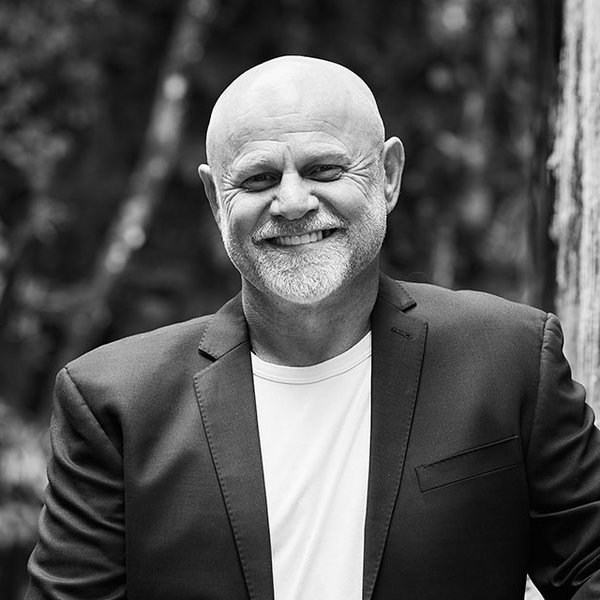
My name is Ken S Davidson. I live in Far North Queensland, a beautiful place that lends itself to a different perspective.
For two decades I've worked with groups — thousands of people across corporate, community, and institutional settings — running processes that reliably demonstrate something most frameworks can't account for: that people have access to a quality of intelligence our default cognitive operating system can't produce. I've seen it too many times to dismiss and too consistently to call mystical. Something structural is going on. The work I do now is about naming that structure.
The books
The first book, Cognitive Unease: What Lies Beneath the Way We Think, Work and Live, comes out in November 2026. It reads the low-grade unease so many of us carry as a signal from an intelligence that began installing in us and stopped part way, and asks what becomes possible once we recognise it. Relational Intelligence and Only Human complete the trilogy.
Working together
I work with organisations, leadership teams, and audiences who sense the usual frameworks aren't reaching the actual problem — and who are ready to look at what's underneath.
Speaking
On the patterns of intelligence that binary thinking can't reach, and what becomes available once you can see the operating system you're running on.
- Beyond Binary. The cognitive operating system hiding inside every organisational challenge.
- Relational Intelligence and AI. Why the next chapter of artificial intelligence depends on a human upgrade.
- Cognitive Unease. What our baseline anxiety is actually telling us.
Consulting
Relational intelligence — the operating layer that determines how teams actually think, decide, and relate, beneath the visible structures of strategy and process.
- Leadership teams navigating complexity that binary frameworks can't resolve.
- Organisations redesigning culture and decision-making beyond command-and-control defaults.
- Teams working at the intersection of human and artificial intelligence.
Formats & availability
Conferences, leadership retreats, and organisational events. Based in Far North Queensland and available internationally.
Get in touch
A short email saying what you're working with is the best way in.